
What Americans Need Their Homes to Do
| 6 Min Read

Home design used to be judged from the doorway, by how a room looked to a guest walking in. That standard has lost ground to a harder test, one measured in hours rather than impressions. A living room now hosts a workday, a workout, a dinner and a moment of solitude, often before the sun goes down.
Brenau University trains interior designers to solve exactly that kind of problem, so understanding how households use their space matters to their work. To map it, a questionnaire was administered to 1,008 American adults who own or rent their homes about interior design and what they need those homes to do for them. Their responses describe overworked rooms, the real financial value of a good layout, and a widening gap between the spaces people have and the lives they lead.
Key Takeaways
- 72% of Americans do three or more activities in their single busiest room every day, and 27% do five or more.
- 28% would give up square footage in exchange for quiet and separation.
- 88% of Americans have at least one room they cannot get right.
- Only 17% of Americans still call a well-designed room a luxury, while 46% call it a necessity.
- Americans would pay 7% more for a home designed around how they actually live.
- 50% of Americans trust a professional interior designer more than an AI design tool. Just 18% trust the AI tool more.
- 29% of Americans have paid $500 or more to undo a design decision they made themselves.
The Room That Does Four Jobs Before Dinner
Most homes have one space that absorbs everything. It handles the tasks other rooms were built for, shifting from office to lounge to retreat as the day moves along. That load reveals more about modern living than any floor plan does.
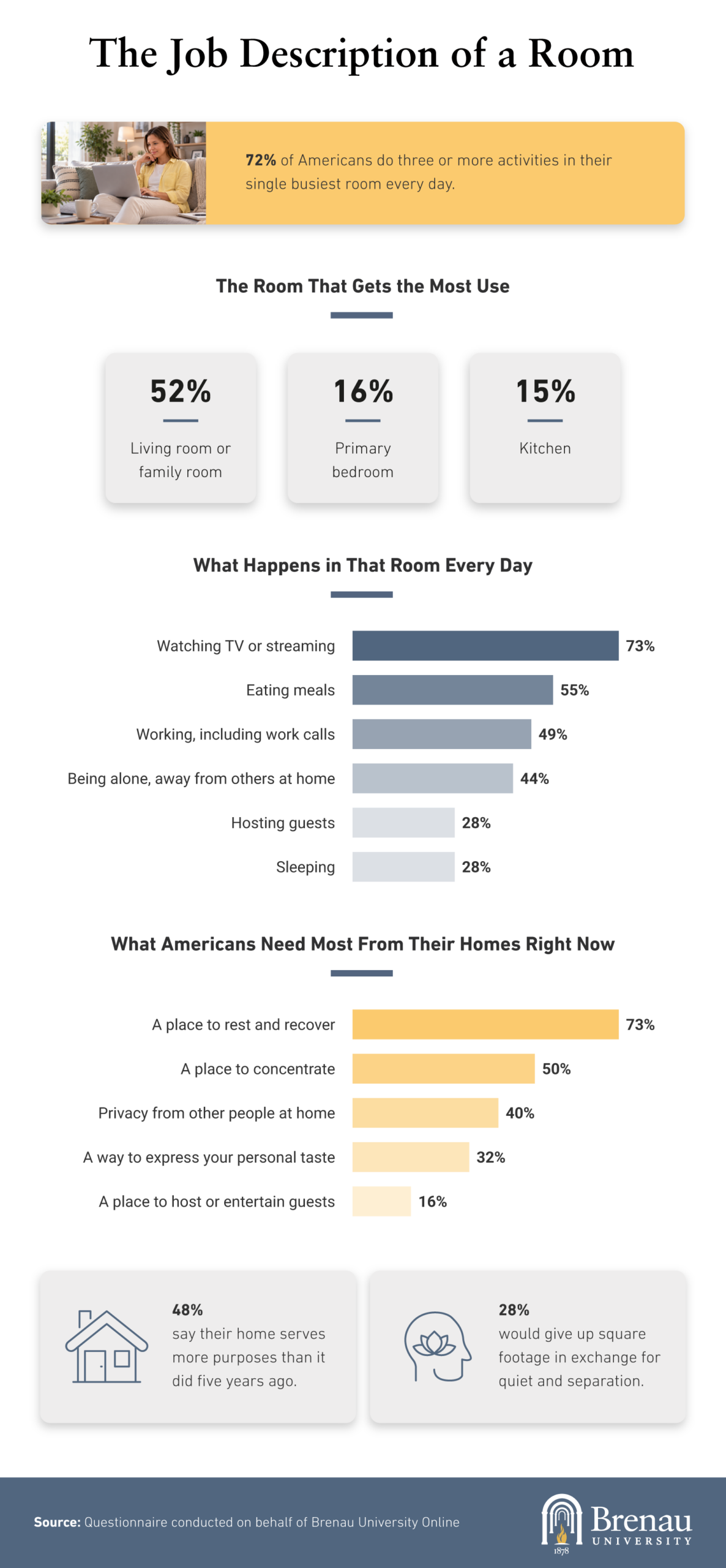
Multitasking defines the busiest room in the American home. Among respondents, 72% did three or more activities in that single room every day, and 27% did five or more. Rooms designed for one purpose are carrying four or five.
The specific activities stack up quickly. Watching television topped the list at 73%, 49% of Americans worked in that same room and 44% went there when they wanted to be alone. Concentration, rest and solitude compete for the same square footage.
Pressure of that kind changes what people want from a floor plan. More than a quarter of Americans, 28%, would give up square footage in exchange for quiet and separation. Space itself has become less valuable than the ability to close a door.
What a Room That Finally Works Is Worth
Attitudes toward design have moved away from decoration and toward daily function. When a layout fails, the cost shows up in frustration, in conflict at home and eventually in what people are willing to spend. Households have started pricing good design the way they price square footage or a school district.
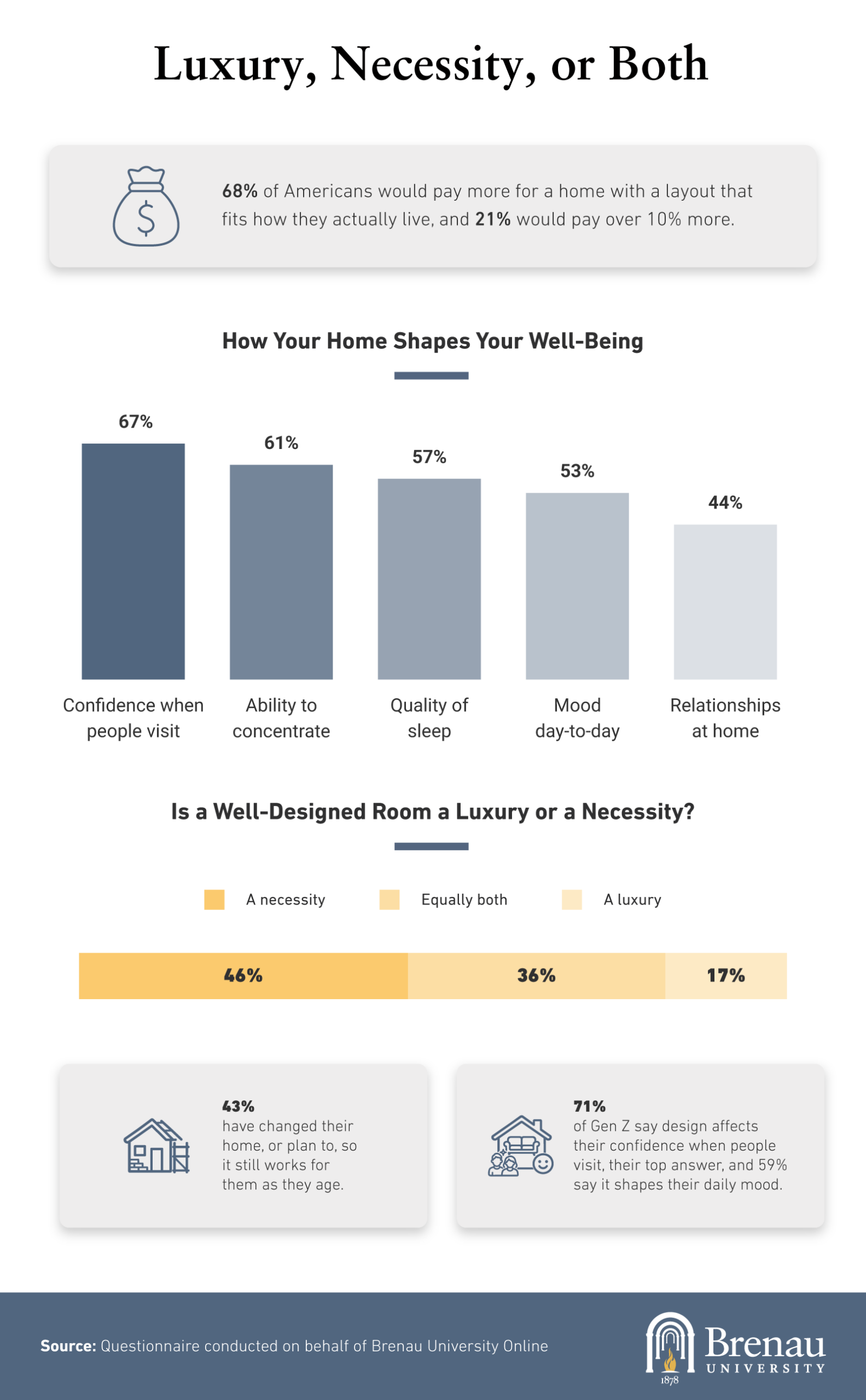
Americans no longer treat thoughtful design as an indulgence. Nearly half, 46%, called a well-designed room a necessity, while only 17% still called it a luxury. The category has shifted from nice-to-have into basic infrastructure for daily life.
That belief carries a price tag. A strong majority, 68%, said they would pay more for a home whose layout fits how they actually live, and Americans put the premium at 7% above the asking price. Layout now competes with finishes and location in how buyers and renters assign value.
Poor design also costs households peace. More than half of Americans, 56%, have argued with someone they live with about their home’s design or layout. Disagreements over where things should go reflect competing needs within a space that cannot meet them all.
Where Do-It-Yourself Design Breaks Down
Access to inspiration has never been easier, and neither has access to tools that promise a finished room in seconds. Yet the gap between a saved photo and a working space remains wide. What happens in that gap explains why so many households stay stuck.
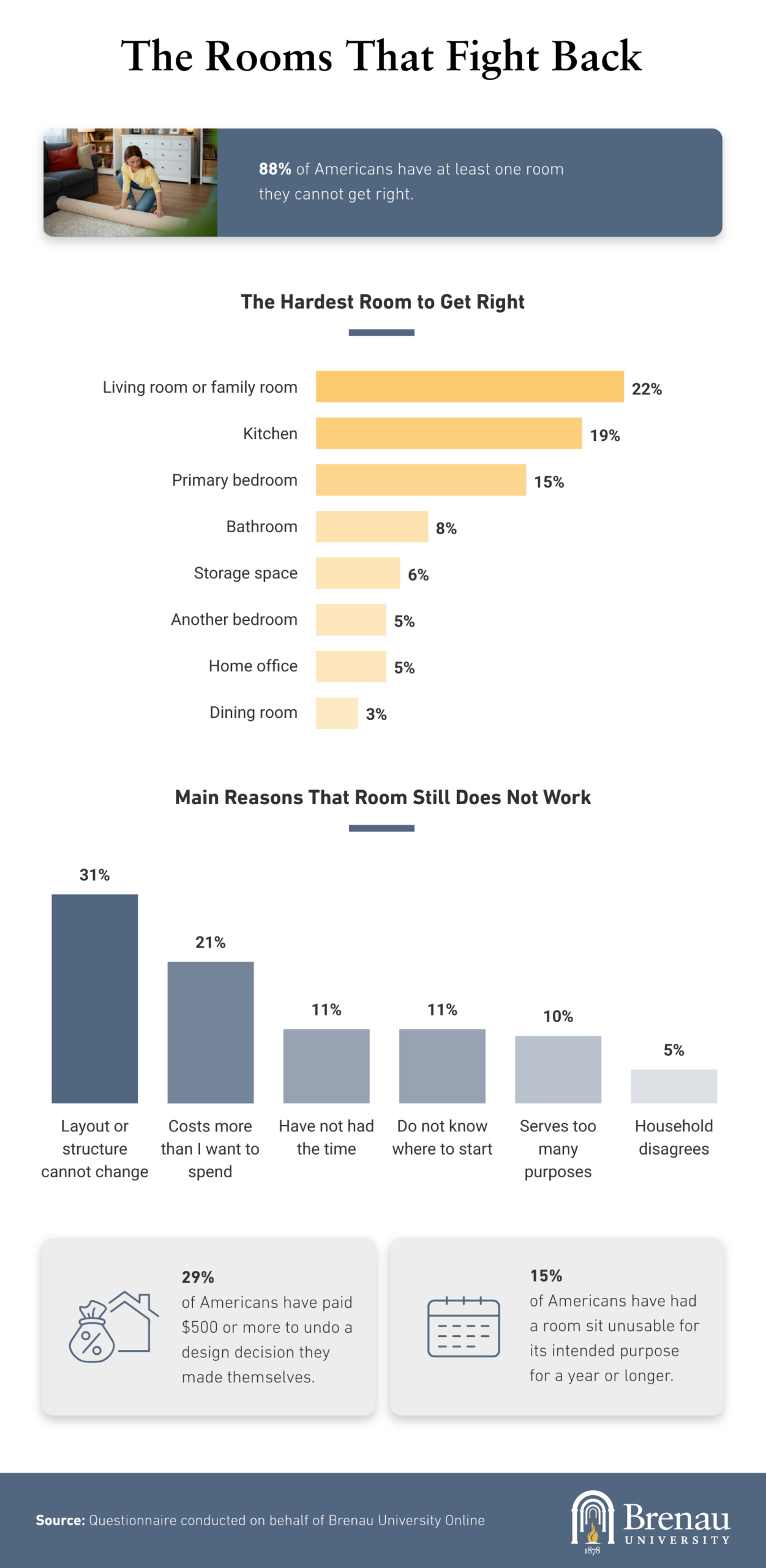
Nearly every household has a problem room. Among Americans, 88% had at least one room they could not get right, and 63% considered moving because their home’s layout or design no longer worked for their life. Frustration with a single space can push people toward the most expensive solution available.
Social platforms shape many of those attempts. Three in five Americans reported copying a room or design idea seen on social media was common, and 29% paid $500 or more to undo a design decision they made themselves. Ideas that photograph well do not always function in every home.
Trust still favors trained professionals over automated help. Half of Americans trusted a professional interior designer more than an AI design tool, while just 18% trusted the AI tool more. Judgment about how people move, rest and work inside a room remains a human skill.
Designing for How People Actually Live
American households are asking single rooms to do the work of four, and most have at least one space that refuses to cooperate. They have responded by treating good design as a necessity, attaching a real premium to layouts that fit their routines and trusting trained designers rather than automated suggestions. The demand described here is not for prettier rooms but for spaces that support how families work, rest and spend time together. Designers who understand that distinction have plenty of work ahead.
Methodology
A questionnaire was administered to 1,008 American adults, all of whom own or rent the home they live in, about interior design and what they need their homes to do. The gender breakdown was women (57%) and men (41%), with the remainder identifying as nonbinary or preferring not to answer. The generational breakdown was as follows: Gen Z (15%), millennials (48%), Gen X (26%) and baby boomers and older (11%). The survey was conducted in September 2026. All percentages are rounded to the nearest whole number.
This was a non-scientific, exploratory study designed to explore behavioral and attitudinal trends. It was not intended to represent all American adults.
About Brenau University
Brenau University has taught design from its home in Gainesville, Georgia, since 1878, with programs shaped around students who study while working. Its online Master of Interior Design program prepares graduates to solve the practical problems households face, from layouts that support several activities at once to spaces that create quiet inside a busy home. Coursework covers human behavior, space planning and the technical skills the profession requires, delivered in a format that fits an existing career. For anyone drawn to how rooms shape daily life, the program offers a route into the field.
Fair Use Statement
These findings are free to share for noncommercial purposes, whether in a classroom, a design publication or a conversation about how homes are changing. Please credit Brenau University with a link back to this page when you use them.