
The Empathy Skill Gap
6 Min Read
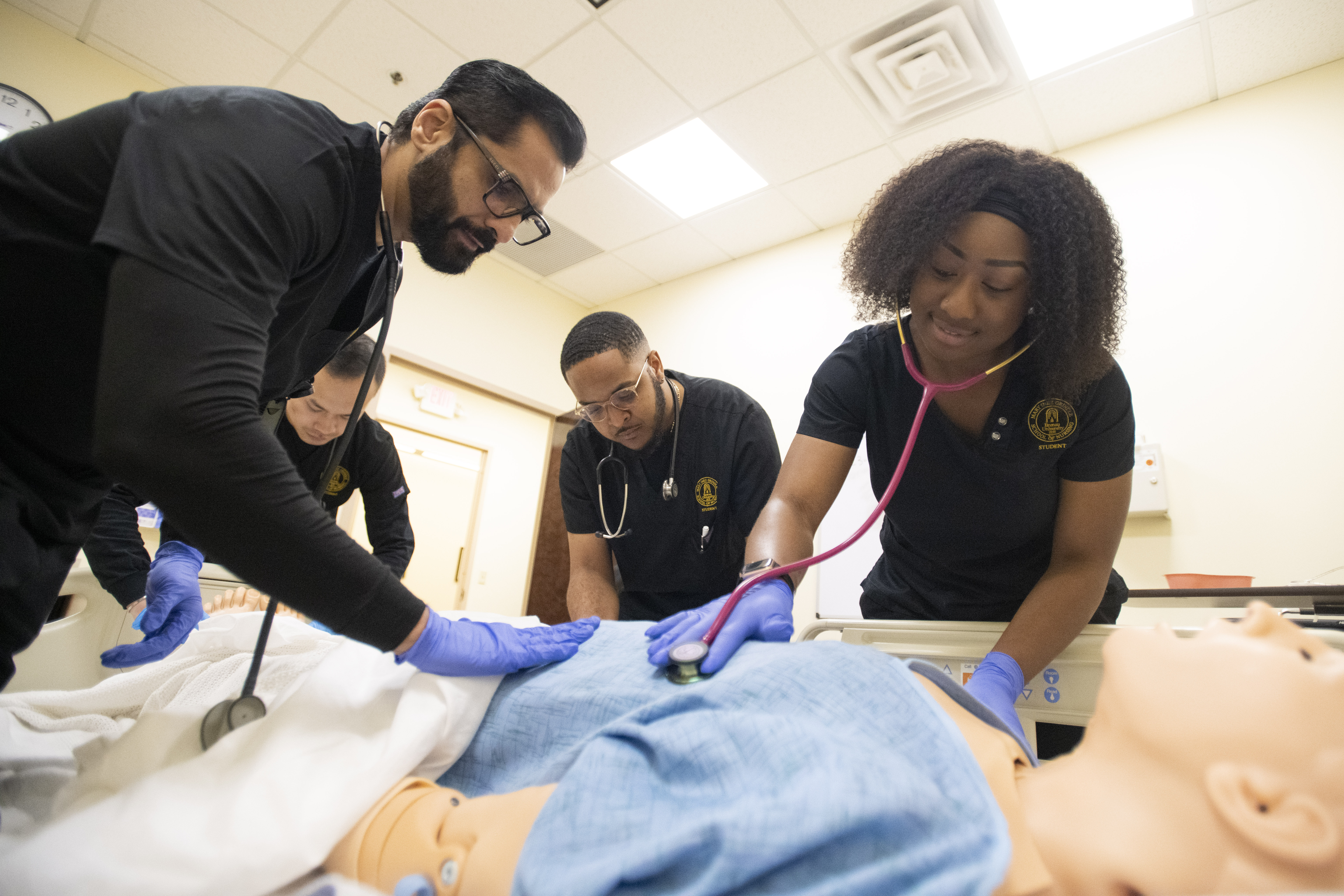
Artificial intelligence is rewriting the healthcare workday, absorbing the charting, scheduling and paperwork that once filled a clinician’s hours. To understand what that shift means for the people who deliver care, a questionnaire was conducted surveying the workers on the front lines and the managers who hire them.
The results pointed to a widening gap. The skills AI cannot copy, empathy chief among them, turned out to be the ones formal training covered least and the ones employers valued most.
Key Takeaways
- 69% of healthcare workers say empathy is the top human skill AI cannot replicate.
- 77% of healthcare workers learn the human skills they use most from personal life, and just 33% credit formal schooling.
- 82% of healthcare employers have passed over a technically strong candidate because their human skills were weak.
- 70% of healthcare workers say AI is making care feel less human for patients.
- 55% of employers would rather hire for human skills and train the clinical side than the reverse.
- 70% of healthcare workers have chosen a doctor or specialist for their own care because that person felt more human, even when credentials were similar.
- 96% of employers now weigh human skills in promotion or pay decisions, and 85% have let someone go or blocked a promotion over weak interpersonal skills.
- 19% of healthcare workers say empathy is the skill they most wish they had been taught before their first patient.
The Human Skills That Matter Most as AI Takes Over the Rest
AI has already moved into the parts of the job that never required a human touch. When we asked healthcare workers what still does, the answer was overwhelmingly about connection rather than technical skills.
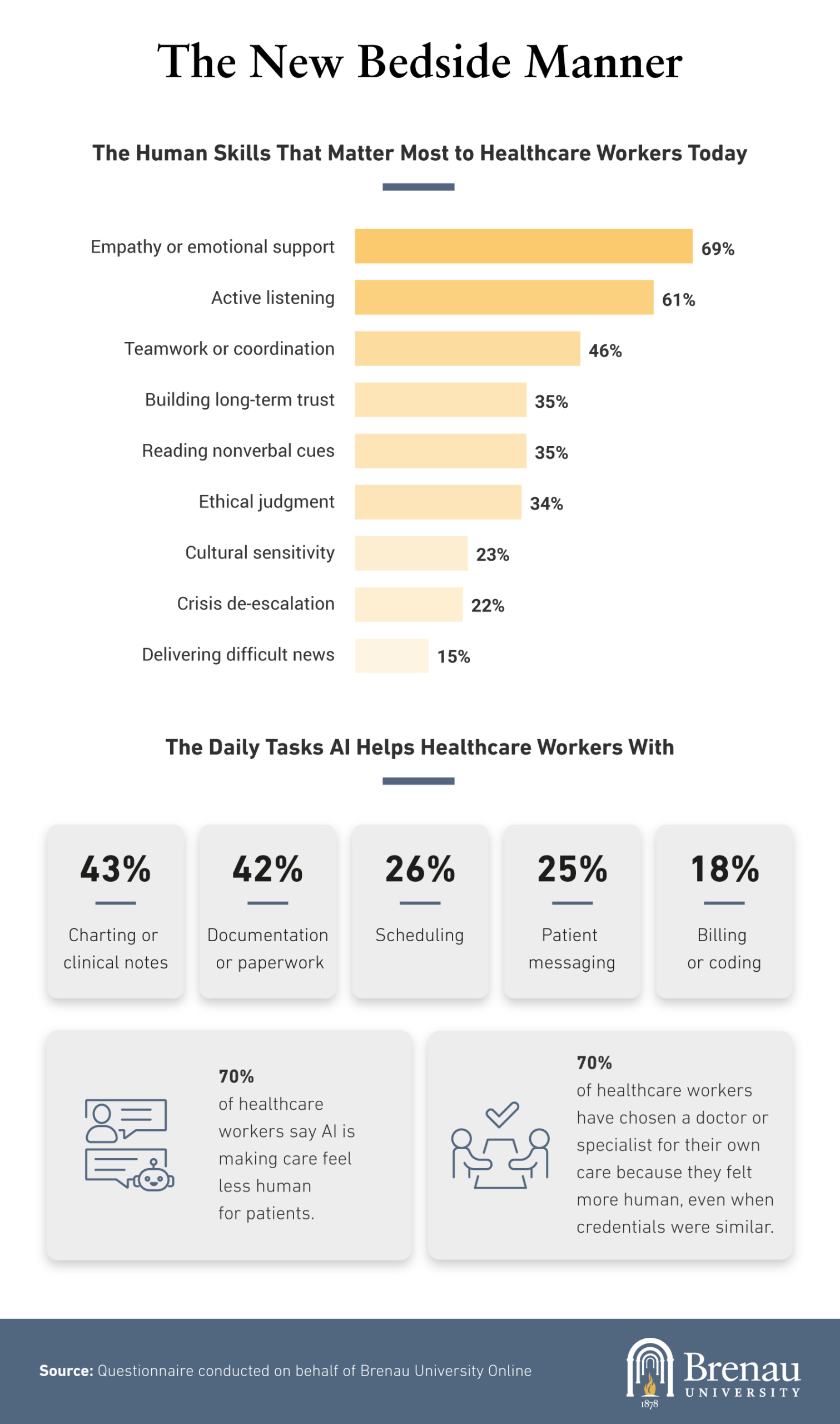
Empathy or emotional support topped the list, named by 69% of healthcare workers as a skill that mattered most, followed by active listening (61%) and teamwork or coordination (46%). The pattern held across nearly every role surveyed, though physicians stood out as the exception: 77% of behavioral and mental health clinicians, 76% of allied health therapists and 74% of technicians and medical assistants named empathy, compared with 69% of nurses and just 48% of physicians and physician assistants.
Those human skills mattered more as AI absorbed the routine. More than two in five workers said AI now helps with their charting (43%) and documentation (42%), and the youngest workers felt the change most, as 51% of Gen Z workers reported that AI has taken over charting compared with 32% of Gen X.
Behavioral and mental health clinicians saw the biggest shift in documentation, at 56%. The trade-off worried many of the people delivering care. Seventy percent of healthcare workers said AI was making care feel less human for patients, and the same share had chosen a doctor or specialist for their own care because that person felt more human, even when another option had similar credentials. That preference was strongest among Gen Z workers, at 73%.
The Human Skills Training Programs Leave Behind
If these skills decide who thrives in healthcare, you might expect training programs to teach them first. Healthcare workers told us the opposite.
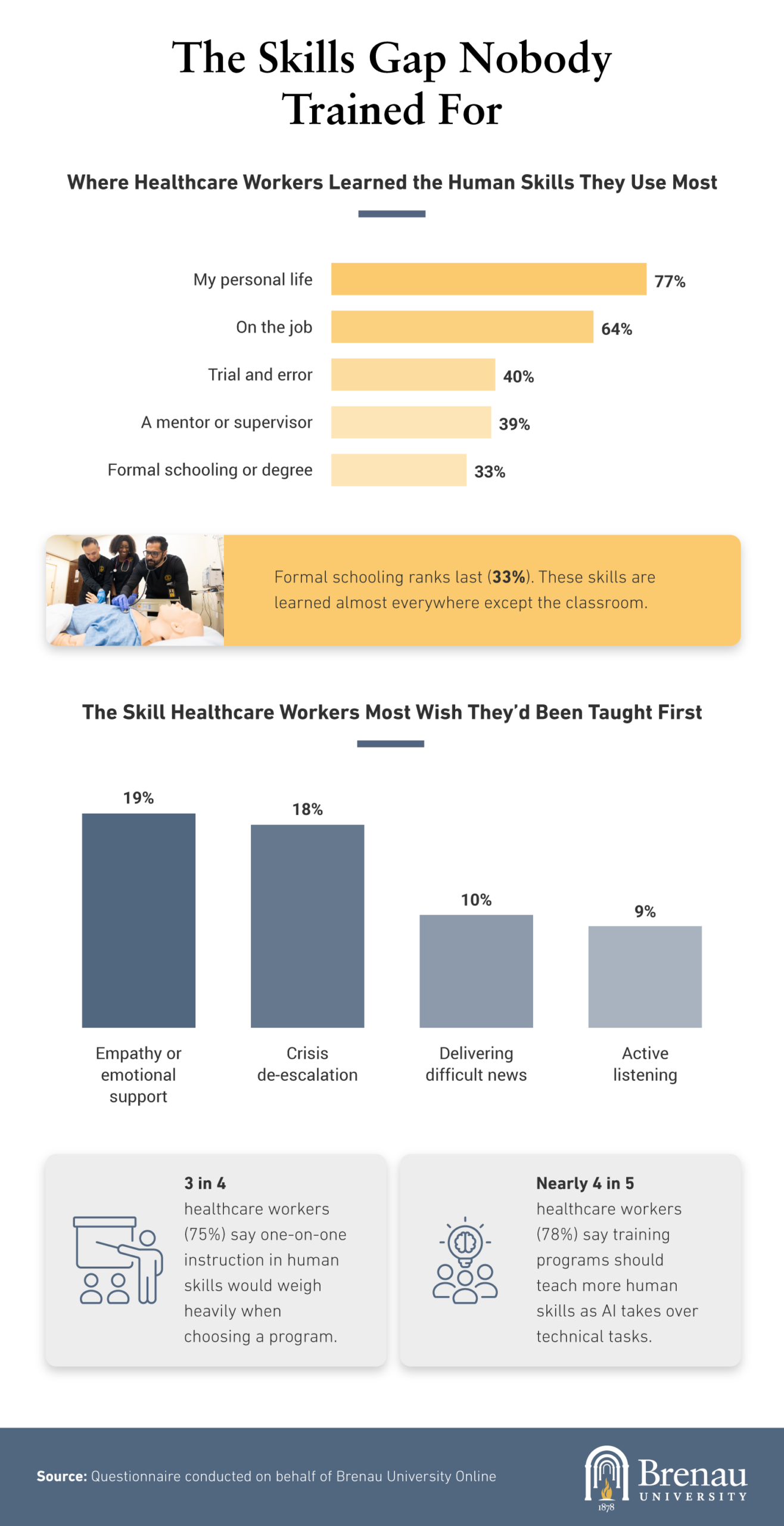
More than three in four healthcare workers (77%) said they learned the human skills they use most from personal life, and 64% pointed to on-the-job experience. Formal schooling came in last, credited by only one-third (33%). That reliance on life over the classroom grew with experience, from 71% of Gen Z workers to 84% of Gen X.
The training gap was just as clear when we asked directly. More than half (55%) said their formal education taught these interpersonal skills only briefly or not at all, a figure that climbed to 85% among physicians and physician assistants and 68% among nurses.
Empathy was the skill workers most wished they had been taught before their first patient (19%), just ahead of crisis de-escalation (18%). Workers also signaled clear demand for change. Nearly four in five (78%) said training programs should teach more human skills as AI takes over technical tasks, and three in four (75%) said personalized, one-on-one instruction in those skills would weigh heavily when choosing a program.
Why Human Skills Now Decide Who Gets Hired and Promoted
Healthcare workers are not the only ones who noticed. The managers who hire and promote them have started making decisions on exactly these skills.
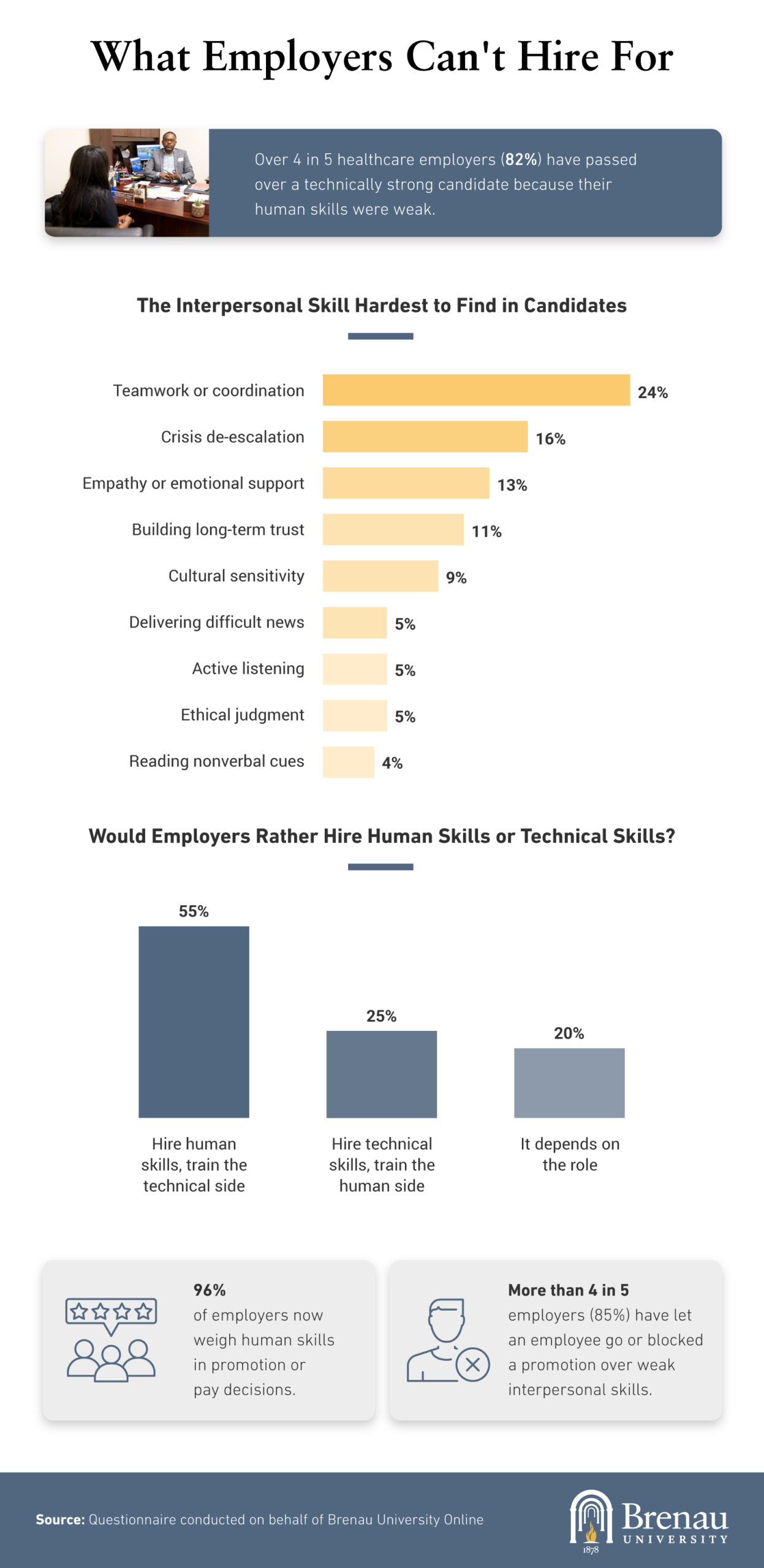
More than four in five employers (82%) had passed over a technically strong candidate because their human skills were weak, and 85% had let someone go or declined to promote them for the same reason. Human skills now factor into pay and advancement for nearly all employers (96%), with 64% calling them a major factor.
Given a choice, more than half of employers (55%) said they would rather hire for human skills and train the clinical side than the reverse. Teamwork or coordination was the single hardest skill to find in candidates, named by nearly one in four (24%), and just over a third of employers (36%) felt new hires arrived with adequate human skills.
Yet training budgets have not caught up. Just 15% of employers directed more of their training budget toward human skills, while nearly half (49%) still sent more to technical skills. Looking ahead, nearly three in five (58%) expected the value of empathy and communication to rise over the next five years.
The Future of Care Still Runs on Human Skills
The takeaway for anyone building a healthcare career is that technical fluency is fast becoming the baseline rather than the differentiator. As AI takes on more of the documentation and routine work, the ability to comfort a frightened patient, defuse a tense moment or earn a family’s trust is what increasingly sets one worker apart from the next.
Those are learnable skills, yet the data suggests most workers picked them up by accident rather than by design. Closing that gap starts with training that treats empathy and communication as core clinical competencies, not soft extras.
Methodology
Two questionnaires were administered on behalf of Brenau University to explore the human skills healthcare work requires, how workers were trained in them and how AI is reshaping the field. The first asked 256 U.S. healthcare workers who provide direct patient care. Respondents were sourced using CloudResearch Connect. The average age of respondents was 36. 73% were women, 25% were men and 3% self-described or preferred not to say.
The second asked 55 U.S. healthcare hiring managers who make staffing, promotion or pay decisions. Respondents were sourced using CloudResearch Connect. The average age of respondents was 43. 69% were women, 29% were men and 2% self-described or preferred not to say. All percentages are rounded to the nearest whole number, so figures may not total 100%.
This was a non-scientific, exploratory questionnaire designed to explore behavioral and attitudinal trends. It is not intended to represent all healthcare workers.
About Brenau University
Brenau University is a private university in Georgia offering career-focused degrees across nursing, psychology and the health sciences. Its programs are built around small class sizes and one-on-one support, with personalized coaching designed to develop the clinical judgment and human skills this research puts front and center.
Fair Use Statement
Feel free to share the findings and visuals from this study for noncommercial purposes. When you do, please link back to this page so readers can view the full research and methodology.